
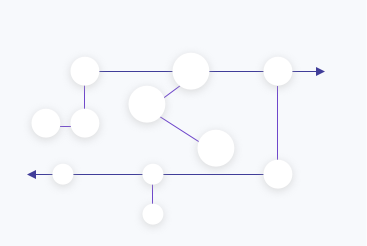
In optimization modeling, understanding dependencies between variables and parameters is fundamental to building accurate and effective models. These relationships define how changes in one factor influence others, forming the backbone of mathematical representations of real-world systems. By identifying and accurately modeling these dependencies, we can ensure that our solutions are both realistic and actionable.
Dependencies are not just mathematical abstractions, they underpin key decisions in fields like supply chain optimization, financial planning, resource allocation and others. Dependencies play a central role in predictive modeling and decision-making systems. For instance, multivariate dependencies are crucial in training machine learning algorithms, while threshold and piecewise relationships are often reflected in decision trees or neural network activations. Mastering these dependencies empowers developers to build models that are robust, adaptable, and insightful, meeting the demands of complex, data-driven environments.
This article explores the main types of relationships in optimization models and provides real-life examples to illustrate their applications.
Proportional Relationships
Proportional dependencies follow the equation y = mx + b, where changes in one variable lead to proportional changes in the other. These relationships are fundamental in linear programming and represent a simple, predictable connection between variables.
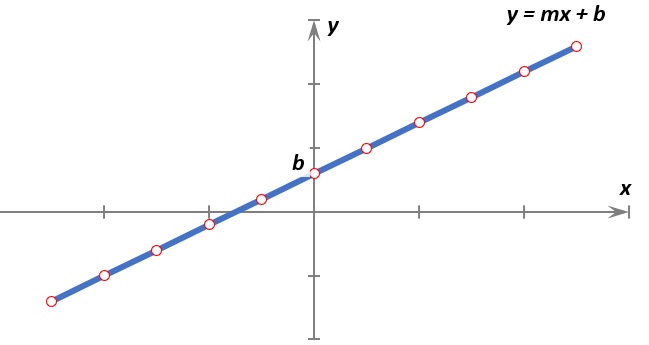
Often, it is required to calculate the sum of a variable over a given period or range. In the context of linear relationships, this summation can provide key insights, such as cumulative totals or accumulated values. For instance, summing a linear function over time is common in scenarios like financial modeling or inventory management.
Applications of Proportional Relationships
Examples
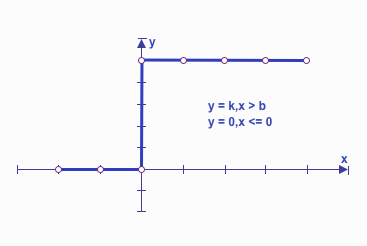
Conditional relationships depend on specific conditions or constraints, often modeled using “if-then” rules or binary variables. These relationships are crucial in capturing decision-based scenarios.
Applications of Conditional Relationships
Manufacturing and Production Scheduling:
Supply Chain and Logistics:
Finance and Investment:
Example (Demand Elasticity: Approach#1)
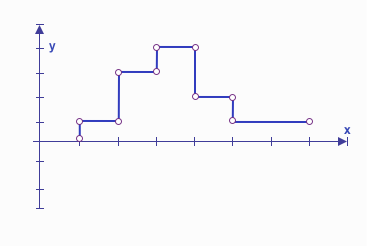
Threshold relationships describe changes in behavior when a variable exceeds or falls below certain critical values. These relationships are common in many fields, such as taxation, pricing, or utilities, where specific thresholds determine changes in behavior or rates.
In “threshold relationships” cases, any value of the independent variable (X-axis) in the corresponding range corresponds to one value of the dependent parameter (Y-axis). In essence, the function “switches” between different ranges of X values, and only one corresponding Y value is used for calculations at any given time, depending on which range X falls into.
Applications of Threshold (Steps) Relationships:
Example (Demand Elasticity: Approach #2)
Below is a fragment of a model for maximizing sales profits by determining the optimal selling price for goods given price elasticity. The decision variables represent the quantity of product sold at each price step and whether the sale occurs at that price. The constraints ensure that sales quantities match demand at each price step and are consistent across adjacent prices.
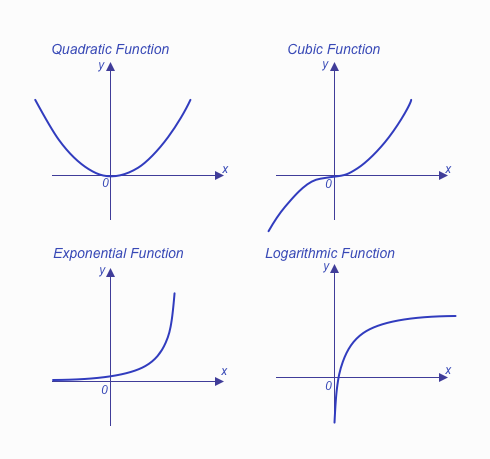
Nonlinear relationships include exponential, quadratic, logarithmic, and other complex forms. These are used to model systems with diminishing returns, growth rates, or other non-proportional dependencies.
Applications of Conditional Relationships:
Example (Hydrothermal Scheduling Problem with Conic Programming):
Hydrothermal scheduling problem involves allocating the total power demand and losses among the hydro and thermal generators in a least-cost way. The scheduling period is typically a few days long. The hydraulic flow constraints and the limits on generator outputs have to be observed in the scheduling problem.
In inverse relationships (y = k / x, where y and x are inversely proportional, and k is a constant), one quantity increases as another decreases.
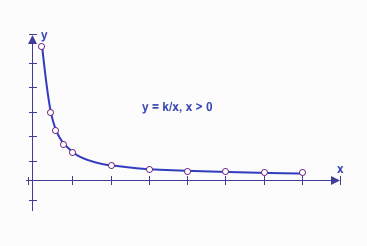
This type of relationship is common in models involving resource allocation, efficiency, or natural laws.
Applications of Inverse Relationships:
Example (Assignment of Workers to Tasks):
The cost of assigning a worker to a task increases as the number of tasks assigned to that worker decreases.
Piecewise relationships occur when a variable’s behavior is described by different functional equations or rules across distinct intervals of another variable. These intervals are often defined by thresholds, boundaries, or ranges. Piecewise relationships are particularly useful when modeling systems with abrupt changes or behaviors that cannot be captured by a single continuous equation.
These relationships are expressed mathematically as:
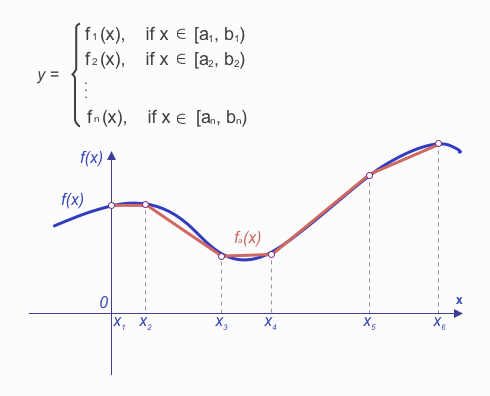
Key Characteristics of Piecewise Relationships:
Why Piecewise Models are Important
Piecewise models simplify and effectively represent real-world scenarios with abrupt or tiered changes. By breaking down complex relationships into manageable segments, they offer:
Applications of Piecewise-Linear Relationships
AMPL Fragment: Tax Brackets
It is necessary to calculate the tax amount taking into account the following rules
Example (Progressive Income Tax Calculation Model):
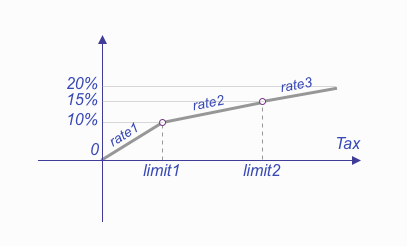
Explanation of the Model:
The expression between << and >> describes the piecewise-linear function, and is followed by the name of the variable to which it applies. (You can think of it as ‘‘multiplying’’ Tax, but by a series of coefficients rather than just one.) There are two parts to the expression, a list of breakpoints where the slope of the function changes, and a list of the slopes, which in this case are the cost rates. The lists are separated by a semicolon, and members of each list are separated by commas. Since the first slope applies to values before the first breakpoint, and the last slope to values after the last breakpoint, the number of slopes must be one more than the number of breakpoints.
Each tax bracket is applied to the corresponding portion of income.
If income is $120,000:
Total tax = $5,000 + $7,500 + $4,000 = $16,500.
This type of relationship is used when it is necessary to calculate values only on the section(s) of the Linear-piecewise function
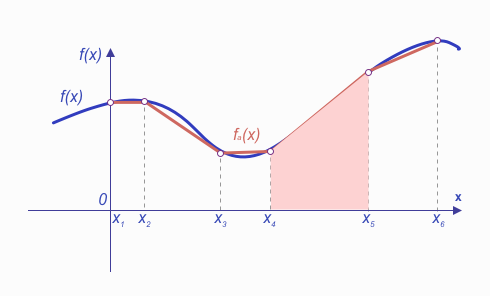
Example (Demand Elasticity: Approach #3):
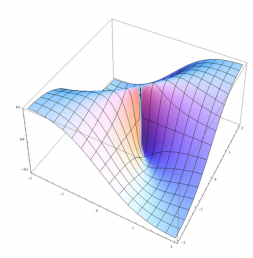
Multivariate relationships describe dependencies where a single output variable (e.g., z) is influenced by multiple input parameters (x,y,…), often represented as:
z = f(x, y, … )
These relationships capture the interactions and combined effects of multiple factors. Unlike simpler relationships, multivariate models account for how variations in several inputs simultaneously impact the outcome, enabling a more holistic understanding of complex systems.
In mathematical optimization, these relationships are crucial for constructing realistic models that consider the combined effects of multiple interdependent factors. Depending on the application, these relationships can take linear, nonlinear, or even stochastic forms.
Applications of Multivariate Relationships
Understanding and accurately modeling dependencies is crucial for developing mathematical optimization models that reflect real-world complexity. From linear to nonlinear and piecewise relationships, each type offers unique insights into how variables interact, enabling models to capture diverse behaviors. Here are key takeaways and best practices for effectively modeling relationships:
By following these practices, developers can construct optimization models that are not only computationally efficient but also aligned with the complexities of real-world systems, paving the way for smarter decisions in fields ranging from logistics and finance to AI-driven analytics.